What Is eCPM? Quick Definition and Formula
eCPM stands for effective cost per mille, or effective cost per thousand impressions. It's the standard metric publishers use to compare ad revenue across networks, formats, and placements, regardless of whether the underlying deal is priced by impression, click, or action.
(Total Ad Revenue ÷ Total Impressions) × 1000
Example: $45 in revenue from 30,000 impressions works out to a $1.50 eCPM.
Because eCPM normalizes revenue per thousand impressions, it lets publishers compare a CPM-priced direct deal against a CPC or CPA network on equal footing, which is why it's the default benchmark inside most ad mediation setups.
Why Is Your eCPM Low? 5-Point Diagnostic
Before adding new demand or new formats, rule out the five most common causes of a weak eCPM:
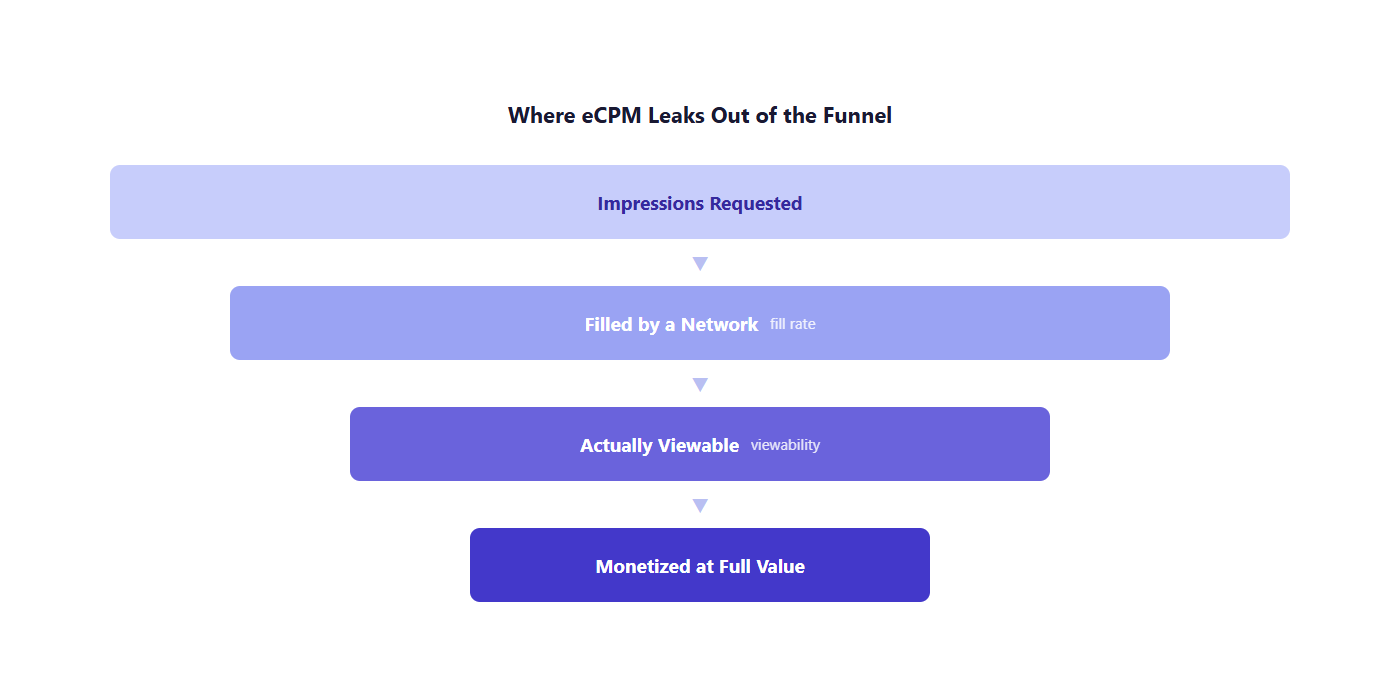
- 1Low fill rate - impressions requested but not filled by any network, which counts as effectively zero revenue on that traffic.
- 2Poor viewability - ads that load but never enter the visible viewport rarely qualify for premium demand.
- 3Mismatched ad format - banners running in placements that could support higher-value rewarded or native units.
- 4Thin geo mix - traffic weighted toward lower-value regions without formats or floors adjusted to match.
- 5Single demand source - one network setting the price with no competing bids to push it up.
10 Ways to Increase eCPM
The steps below cover how to increase eCPM in practice, one lever at a time. Work through this checklist in order; most publishers see the largest gains from the first few items before the later, more incremental ones.
1. Diversify Demand Sources
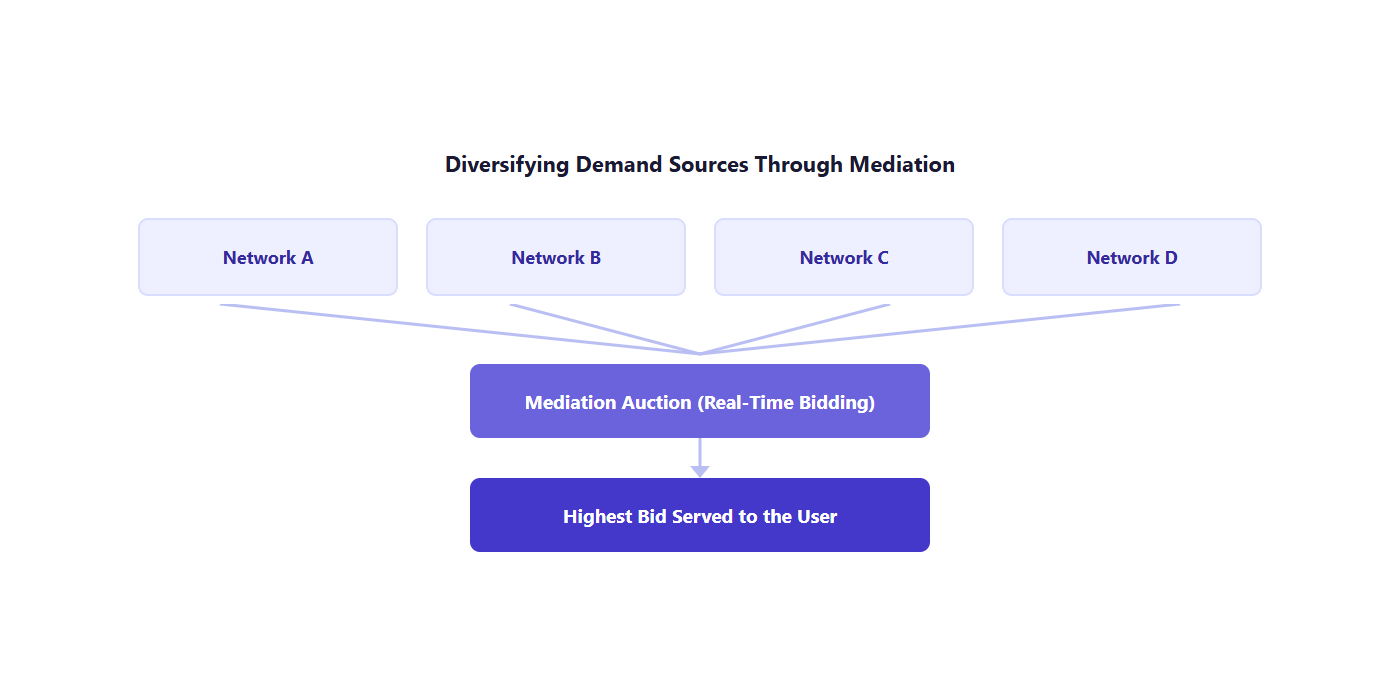
Route the same impression through more than one bidder. Running Google AdMob, Google Ad Manager (AdX), AppLovin MAX, and Yandex Ads Monetization inside a single mediation stack lets more than one buyer bid on each impression, which is the single biggest lever behind most eCPM gains.
2. Upgrade Ad Formats
Not all ad formats carry the same value. Rewarded video and native units typically clear a higher eCPM than standard banners, and interstitials placed at natural transition points outperform interstitials that interrupt mid-task.
3. Optimize Ad Viewability
An ad that never enters the visible viewport earns little regardless of format. Lazy-load below-the-fold units, use sticky placements on long-scroll pages, and cap ad refresh intervals so impressions stay genuinely viewable rather than just technically served.
4. Target High-Value Geographies
Advertiser demand isn't evenly distributed. Tier-1 markets such as the US, UK, Canada, and Australia typically command a directionally higher eCPM than emerging markets, so segmenting reporting and floors by geography surfaces where the biggest gains are actually available.
5. Set and Test eCPM Floor Prices
A floor set too low leaves revenue on the table; one set too high suppresses fill rate. Test floors in small increments per geography and ad unit, and revisit them monthly rather than setting them once and leaving them static.
6. Improve Site/App UX
Ad revenue and user experience aren't opposed for long. Faster page load, stable Core Web Vitals, and ad placements that don't cover content tend to retain more sessions per user, which compounds into more impressions over time.
7. Run A/B Tests
Treat placement, format, and mediation changes as experiments, not one-off tweaks. Testing one variable at a time against a held-out control group is the only reliable way to confirm a change actually improved eCPM rather than coincided with normal traffic variation.
8. Capitalize on Seasonal Peaks
Advertiser budgets aren't flat year-round. The Q4 holiday shopping season has historically brought a directional 20-60% eCPM lift across many verticals, so raising floors and prioritizing premium formats ahead of that window can capture demand that's already increasing.
9. Address Ad Blocking
Ad blockers suppressed an estimated $54 billion in publisher ad revenue in 2024, according to industry reporting. Serving acceptable-ads-compliant formats, offering a lightweight ad-block recovery message, and avoiding the intrusive formats that drive blocker adoption in the first place all help recover part of that gap.
10. Choose the Right Monetization Partner
Not every mediation platform or network fits every publisher. Weigh support quality, payment reliability, and reporting transparency alongside headline eCPM figures, since the partner with the best number on paper isn't useful if fill rate or payment terms don't hold up in practice.
Platform-Specific Quick Notes
Each major network or mediation platform rewards a slightly different lever first. The table below summarizes the highest-impact setting to check for six commonly used platforms, without repeating a full setup walkthrough for each.
| Platform | Primary Lever | Key Setting |
|---|---|---|
| AdMob | Mediation waterfall order | Enable in-app bidding where available |
| GAM / AdX | Unified pricing rules | Set price floors per line item, not globally |
| Meta Audience Network | Format mix | Prioritize rewarded and native over banner |
| AppLovin MAX | Bidding coverage | Add more bidders per ad unit |
| Unity Ads | Placement targeting | Match placements to natural in-app break points |
| StartApp | Fill rate | Widen targeting before raising floors |
What Is a Good eCPM? Quick Benchmarks
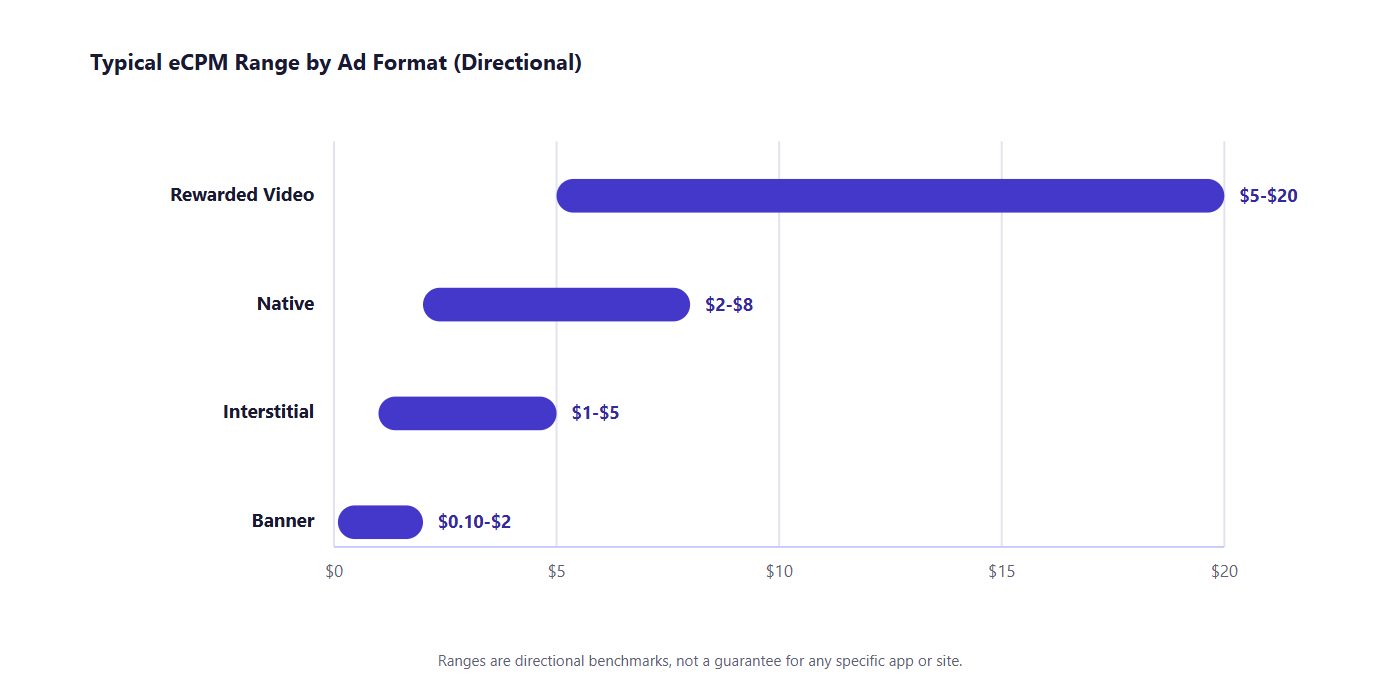
There's no single "good" eCPM number - it depends heavily on ad format, geography, and vertical. As a directional reference, banner units commonly range from $0.10-$2, interstitials from $1-$5, and rewarded video from $5-$20, with Tier-1 geographies trending toward the higher end of each range. Treat every figure here as directional, not a guarantee for any specific app or site.
| Ad Format | Typical eCPM Range (directional) |
|---|---|
| Banner | $0.10 - $2 |
| Interstitial | $1 - $5 |
| Rewarded Video | $5 - $20 |
| Native | $2 - $8 |
Conclusion
Increasing eCPM rarely comes down to one change. Publishers who see the largest gains typically work through several levers at once: broader demand, better-matched formats, verified viewability, and floors that are tested rather than guessed. Publishers evaluating a new demand source for CIS, Eastern Europe, or the Middle East often add Yandex Ads Monetization alongside their existing mediation stack rather than replacing what's already running. Reviewing the diagnostic checklist above monthly, rather than once, is what keeps eCPM moving instead of drifting back down.
See the FAQ page for answers to common eCPM questions.